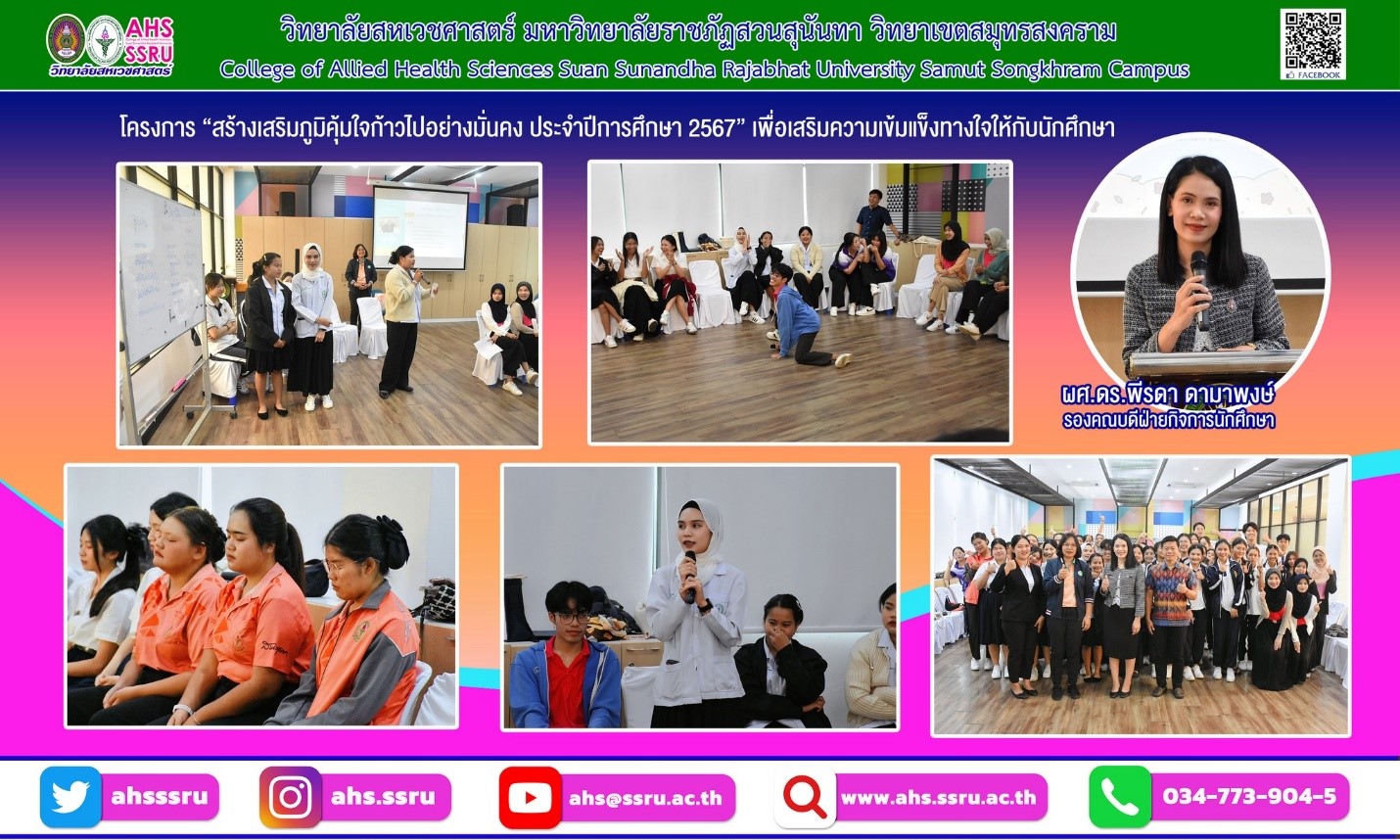
“Enhancing Mental
Resilience for Steady Progress”
Project, Academic Year 2024: Promoting
Mental Strength Among Students at Samut
Songkhram Campus The
“Enhancing Mental Resilience for
Steady Progress” project for the
academic year 2024 was organized by the
College of Allied Health Sciences, Suan
Sunandha Rajabhat University, Samut
Songkhram Campus. The initiative aimed
to strengthen the mental resilience of
students, equipping them to cope
effectively with stress, personal
challenges, and academic pressure. This
effort aligns with the United Nations
Sustainable Development Goals (SDGs),
particularly Goal 3: Good Health and
Well-Being. The project focused on
promoting mental health among university
students—a key demographic in the
future development of the country. It
recognizes that mental resilience is a
foundational aspect of holistic
well-being, contributing to academic
success, life balance, and constructive
participation in
society. Objectives of the
Project 1. To strengthen
psychological resilience and develop
coping mechanisms among students in
dealing with stress, personal issues,
and learning challenges. 2. To
raise awareness about mental health and
enhance emotional and psychological
self-care skills among the student
body. 3. To create a safe space
for sharing experiences, exchanging
knowledge, and fostering supportive
relationships among students, thereby
reducing social isolation and promoting
a sense of belonging within the
university community. The project
was held on December 6, 2024, in the
100-seat conference room on the 5th
floor of Phdung Chiva Building (College
of Nursing and Health Building), Suan
Sunandha Rajabhat University, Samut
Songkhram Campus. The event featured two
expert speakers: Ms. Benyapha Somlak,
Senior Clinical Psychologist, and Ms.
Warisa Singhalawa, Social Worker
Practitioner from Mental Health Center
5, Samut Songkhram Province. They
conducted lectures and participatory
workshops designed to actively engage
students in developing mental wellness
strategies. This project
serves as a tangible example of how
higher education institutions can
contribute to the advancement of SDG
Goal 3 at the local level. By
prioritizing mental health—a core
component of overall health—the
project promotes life skills, emotional
well-being, and the prevention of mental
health issues among students in a
structured and proactive manner.