
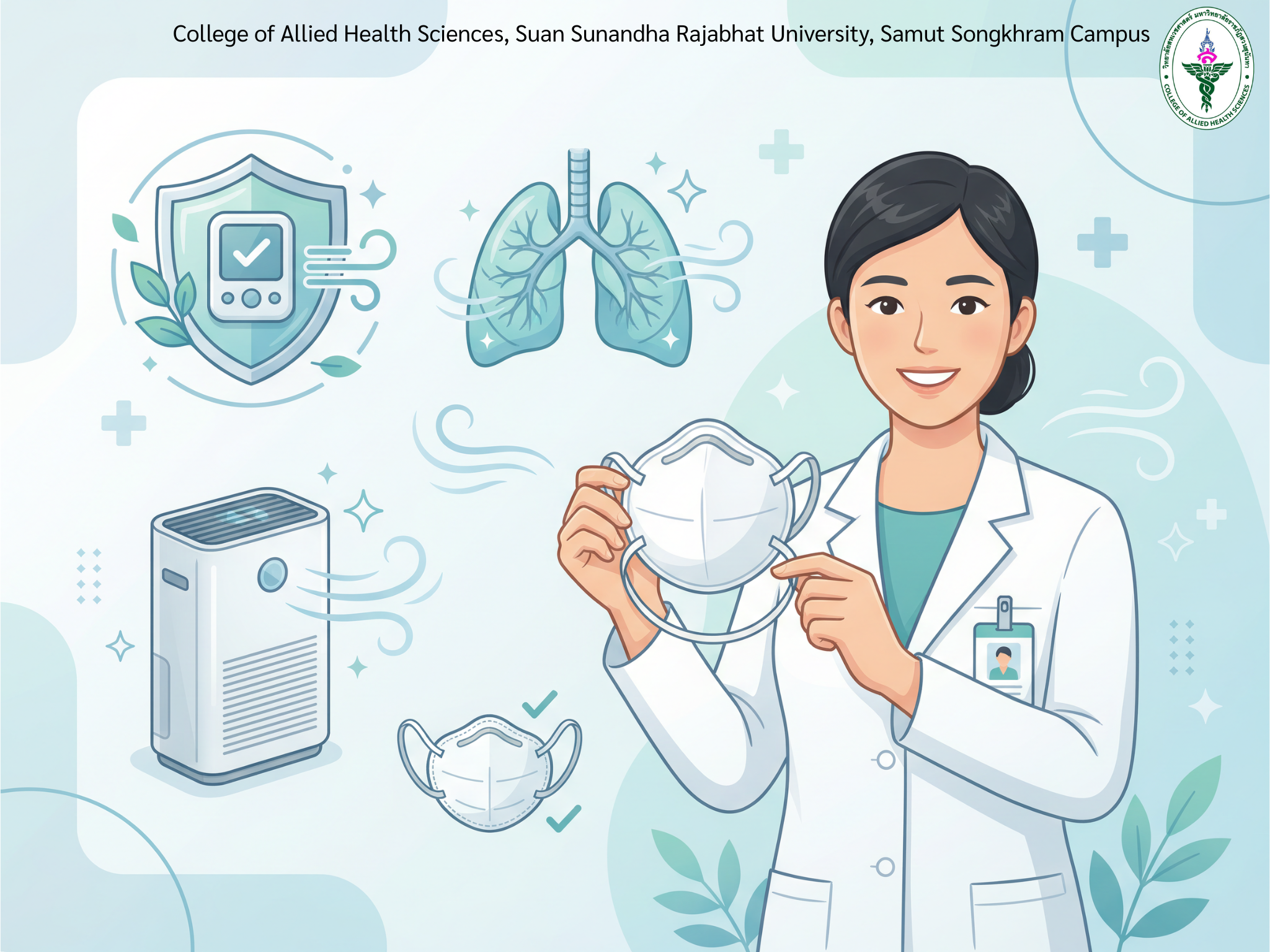
How to Effectively Protect Yourself from PM2.5: Choosing the Right Mask and Reducing Indoor Dust—A Public Health Specialist’s Guide
Particulate matter measuring 2.5 microns or less in diameter—commonly known as PM2.5—poses a widespread threat to public health. Because these particles are 20 to 30 times smaller than the width of a human hair, they can bypass the nasal cavity's natural filtration system, penetrate deep into the lung alveoli, and enter the bloodstream directly.
Drawing on expertise in Public Health and Environmental Health from the Faculty of Allied Health Sciences, monitoring air quality and adopting proper protective measures can significantly reduce your risk of respiratory illnesses, cardiovascular diseases, and allergies.
1. Comparing the Dust-Filtration Efficiency of Different Masks
On days when PM2.5 levels exceed safe standards, selecting the right mask for your environment is your most critical first line of defense
| Mask Type | PM2.5 Filtration Efficiency | Recommended Use |
| N95 / KN95 Respirator | Filters at least 95% of fine particles (when worn with a tight seal). | Ideal for outdoor workers, areas with Orange-to-Red air quality levels, and high-risk groups (older adults, children, and people with heart or lung conditions). |
| Surgical Mask | Filters a moderate portion of PM2.5 (approx. 50–70%, depending on fit). | Suitable for days with moderate air quality (Yellow level) or indoor use. To boost filtration efficiency, wear a cloth mask over it (double masking). |
| Standard Cloth Mask | Blocks larger dust particles and respiratory droplets, but cannot filter PM2.5. | Not recommended as a single layer on days when PM2.5 exceeds safe standards. |
2. How to Wear an N95 Mask Properly (Fit Check)
Even when wearing an N95 respirator, fine particles can still leak through gaps around the cheeks and nose bridge if it is not fitted snugly
- Cover Your Nose and Chin : Unfold the mask and pull the headbands or ear loops taut so that the bottom edge fits securely beneath your chin.
- Mold the Metal Nose Strip : Use the index and middle fingers of both hands to press and shape the metal strip tightly along the contours of your nose bridge and cheekbones. (Avoid pinching the center with one hand, as this creates a sharp peak and leaves air gaps.)
- Perform a Fit Check : Gently cup both hands over the mask and inhale and exhale sharply. If properly sealed, the mask should collapse slightly inward when you inhale, and no air should leak out along the sides or beneath your eyes when you exhale.
3. Environmental Management and Reducing Indoor Dust
- Check Air Quality Before Going Out : Monitor the Air Quality Index (AQI) every morning via the Air4Thai app or official government agencies to plan ahead and avoid outdoor activities on high-pollution days.
- Create a Clean Room : Keep doors and windows tightly closed when outdoor pollution levels are high. Wipe floors and furniture with a damp cloth instead of sweeping to prevent dust from kicking up into the air, and run an air purifier equipped with a HEPA filter.
- Care for Your Body from the Inside Out : Stay well-hydrated by drinking plenty of clean water (6–8 glasses daily) to keep your respiratory tract moist, and rinse your nasal passages with sterile saline solution after returning from heavily polluted areas.