
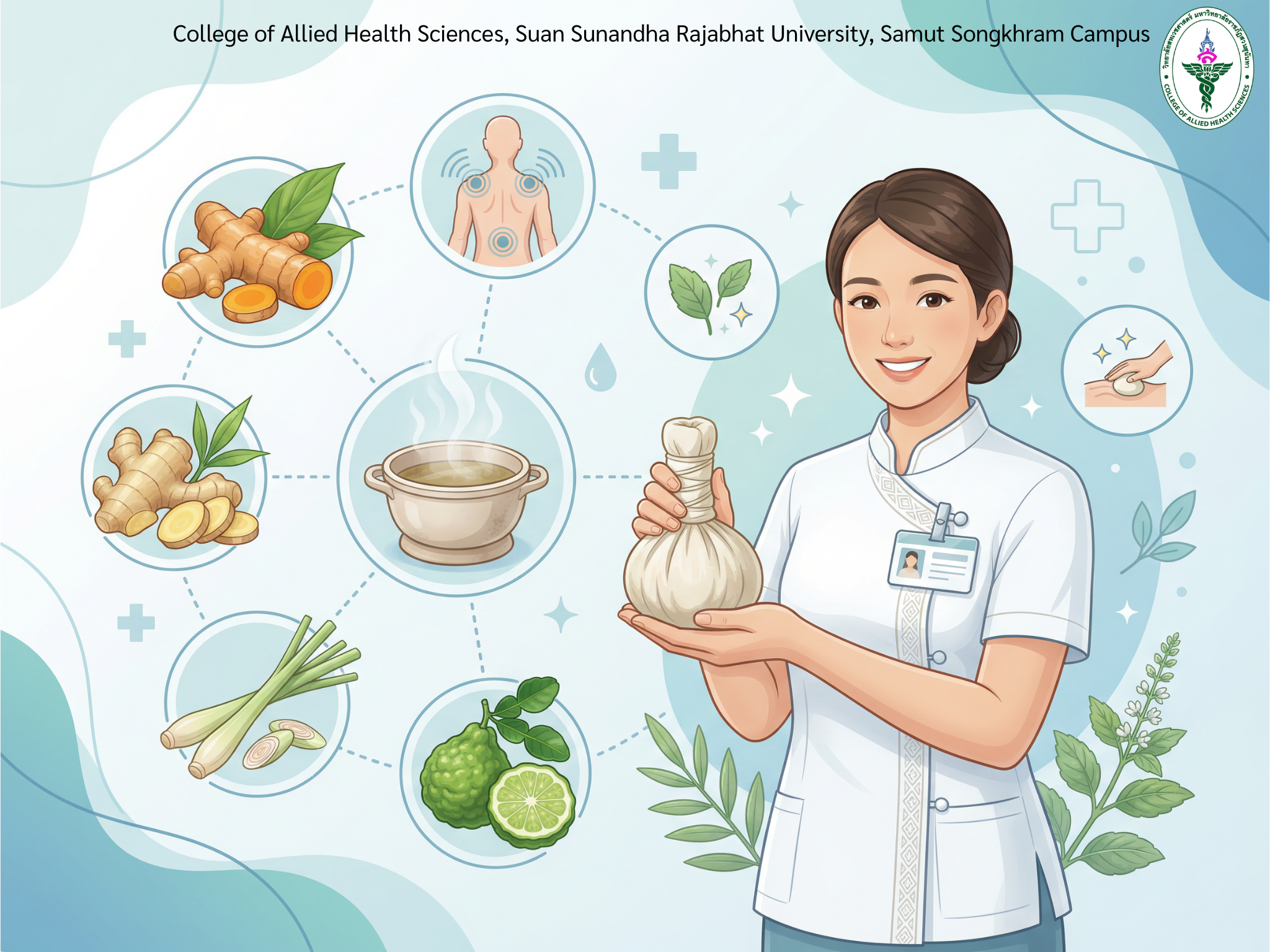
Relieve Aches and Pains with Thai Wisdom : Understanding the Benefits of "Herbal Compresses" and How to Use Them Properly
Muscle tension, sprains, and body aches caused by hard work and aging are common everyday ailments. Alongside medication and physical therapy, traditional Thai medical wisdom—specifically herbal compress therapy (Luk Prakob)—offers an effective natural alternative to relieve pain and stimulate blood circulation.
Drawing on expertise in Thai Traditional Medicine from the Faculty of Allied Health Sciences, understanding the herbal ingredients and proper application techniques allows you to safely use this traditional wisdom to care for yourself and your family.
1. Key Herbs in a Compress and Their Medicinal Properties
Fresh and dried herbal compresses contain a blend of herbs rich in essential oils and anti-inflammatory compounds. When heated through steaming, these essential oils and active ingredients penetrate the skin directly into the muscles:
- Cassumunar Ginger (Phlai) : The primary active ingredient in herbal compresses, rich in essential oils and compounds that reduce inflammation, swelling, pain, and bruising while relaxing muscle spasms.
- Turmeric : Contains curcuminoids, which help relieve muscle and joint inflammation while nourishing the skin and soothing itching or allergic reactions.
- Lemongrass : Provides a relaxing aroma that relieves stress and stimulates localized blood circulation in the compressed area.
- Kaffir Lime Peel : Its essential oils promote a refreshing sensation, clear nasal congestion, and relieve dizziness and fatigue.
- Tamarind Leaves and Soap Pod (Som Poi) Leaves : Mildly acidic, these leaves help cleanse the skin, nourish the complexion, and enhance the skin’s absorption of other herbal compounds.
- Camphor and Borneol: Add a cooling, soothing sensation and pleasant scent while boosting blood circulation and opening skin pores.
2. Step-by-Step Guide to Safe Self-Application
To ensure safety and achieve optimal therapeutic results, follow these steps:
- Steam the Compress : Lightly sprinkle the herbal compress with water, then place it in a steamer for about 10–15 minutes until it is thoroughly heated and releases a rich herbal aroma.
- Test the Temperature : Before applying the compress to the skin, always test its heat on the inside of your forearm or the back of your hand. If it is too hot initially, place a towel over the skin as a barrier, or apply the compress using quick, light tapping motions rather than holding it in place.
- Gradual Compression : Once the compress cools to a comfortable temperature, gently press, roll, and hold it along the tense or aching muscles for about 3–5 seconds per spot. Continue the session for a total of 15–20 minutes.
Important Contraindications and Precautions
- Do Not Apply Heat Immediately After an Injury : If you experience an acute ankle sprain, bruise, or muscle tear within the first 24–48 hours, strictly avoid hot compresses. Heat dilates blood vessels and worsens swelling and inflammation (use a cold compress during the first 48 hours instead).
- High-Risk Groups Requiring Extra Caution : Exercise extreme care with diabetic patients experiencing numbness in their hands or feet, stroke or paralysis patients, young children, and older adults with fragile skin. Reduced heat sensitivity in these groups significantly increases the risk of burns and blisters.
- Avoid Damaged Skin : Never apply a herbal compress over open wounds, infected sores, or inflamed skin.