
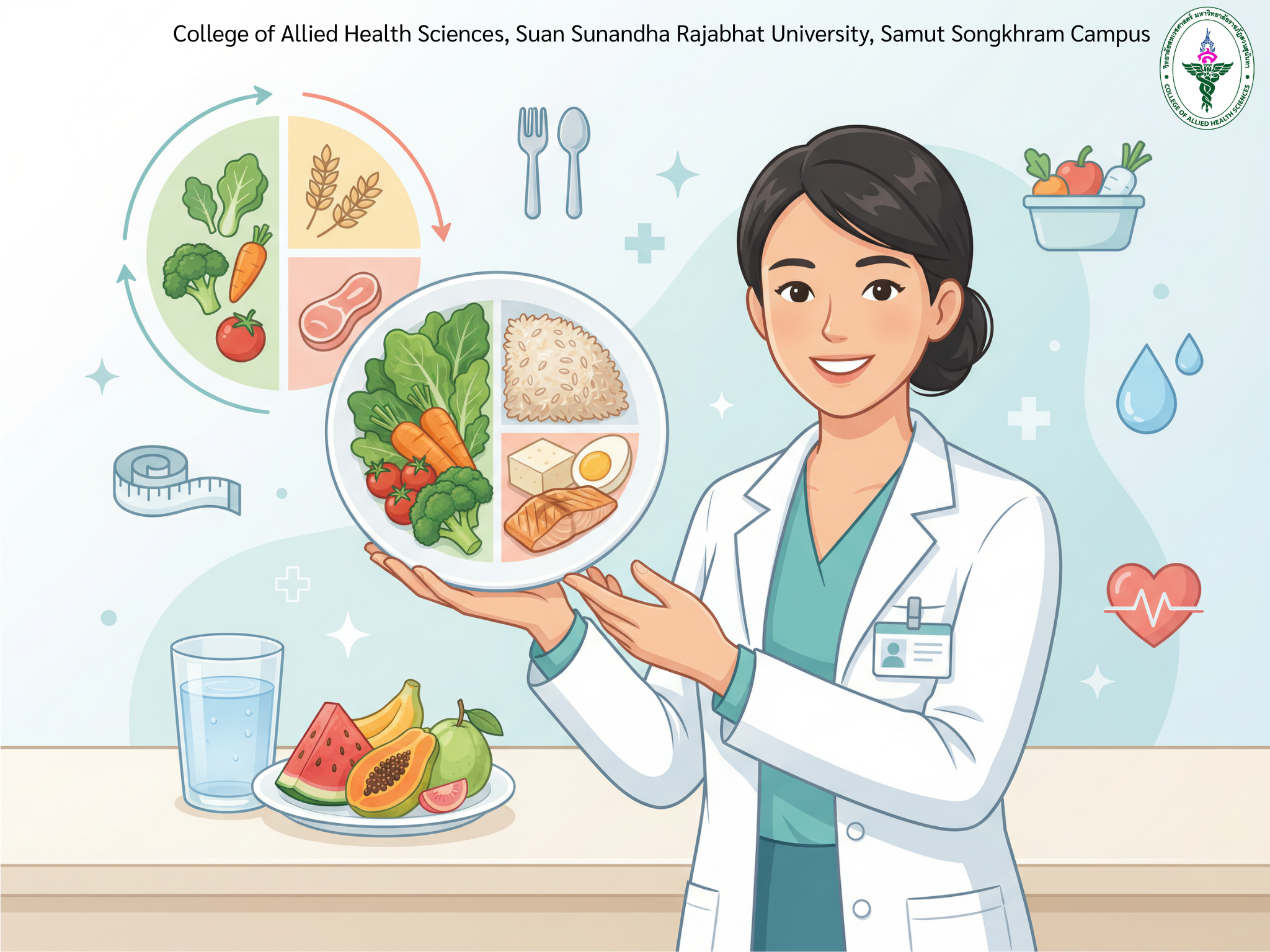
How to Eat Without Gaining Weight and Prevent Chronic Diseases: A Dietitian’s Guide to the "2 : 1 : 1" Healthy Plate Method
Maintaining your health through diet does not mean starving yourself or eating bland, flavorless food. Instead, the key lies in choosing the right types of food and balancing nutrient proportions to meet your body's needs at every meal.
Drawing on expertise in Nutrition and Dietetics from the Faculty of Allied Health Sciences, the "2 : 1 : 1" Healthy Plate Method is an easy-to-follow tool that helps anyone plan balanced meals without the hassle of weighing food or counting calories.
1. What is the "2 : 1 : 1" Plate Method?
Imagine a standard round plate about 9 inches in diameter and divide it into four equal quarters to portion each meal as follows:
- 2 Parts (Half of the Plate) — A Variety of Vegetables : Focus on leafy greens and colorful vegetables—such as Chinese kale, broccoli, cabbage, tomatoes, and carrots—served either raw or cooked. Vegetables are rich in dietary fiber, vitamins, and minerals, which help slow down the absorption of sugar and fat into the bloodstream while keeping you feeling full longer.
- 1 Part (One-Quarter of the Plate) — Unrefined Grains or Starches : Choose complex carbohydrates such as brown rice, Riceberry rice, whole wheat bread, taro, or sweet potatoes, in portions of about 1–2 ladles (serving spoons) per meal depending on your activity level and energy needs. These provide steady energy without causing rapid spikes in blood sugar.
- 1 Part (One-Quarter of the Plate) — Lean Meats and Quality Proteins : Opt for fish, skinless chicken breast, eggs, tofu, or legumes. Avoid fatty cuts of meat, poultry skin, and processed foods (such as sausages, bacon, and meatballs) to minimize saturated fat and sodium intake.
2. Extra Tips for a Complete and Healthy Meal
Beyond portioning your plate, paying attention to cooking methods and beverage choices further reduces the risk of non-communicable diseases (NCDs) such as diabetes, hypertension, and high cholesterol
- Switch Up Cooking Methods : Favor boiling, steaming, grilling, baking, or light spicy salads (yum) instead of deep-frying or stir-frying with excessive amounts of oil.
- Cut Back on Sugar, Fat, and Salt : Always taste your food before adding extra seasoning, avoid drinking excessive amounts of high-sodium soups or curries, and follow the "6 : 6 : 1" daily limit—no more than 6 teaspoons of sugar, 6 teaspoons of oil, and 1 teaspoon of salt per day.
- Choose Fresh Fruit and Plain Water : Finish your meal with one small saucer-sized portion of low-sugar fresh fruit (such as guava, apple, rose apple, or dragon fruit), and drink plain, clean water instead of sodas or sweetened beverages.